
Technical reference — Basra
Al-Abbas drinking water treatment plant
A conventional surface-water treatment plant in Basra with a total capacity of 130,000 m³/day, for Basra Governorate.
- 130,000 m³/dayTotal capacity
- 4.5 haPlant area
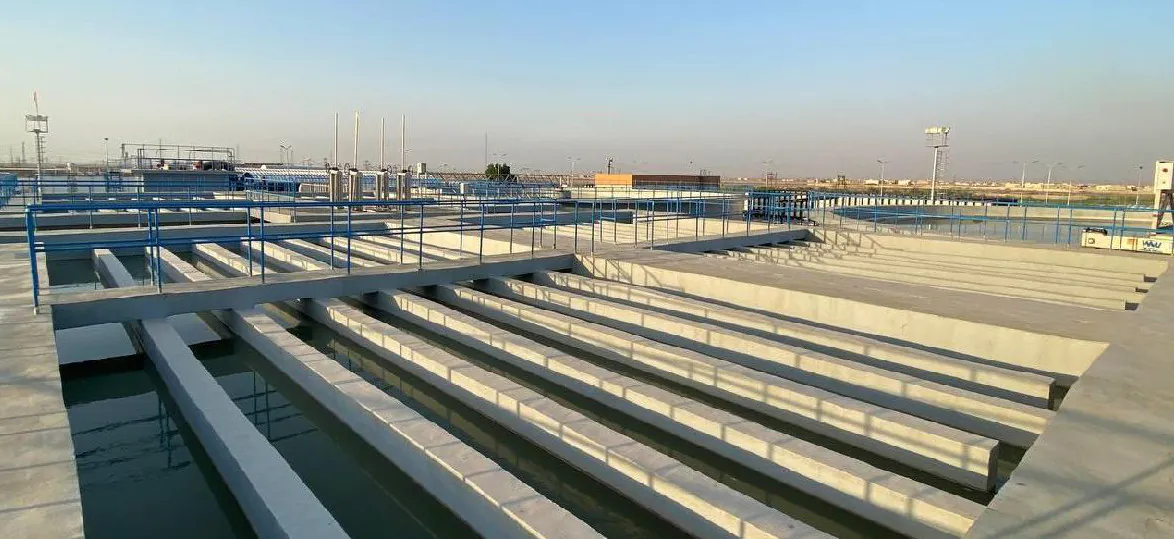
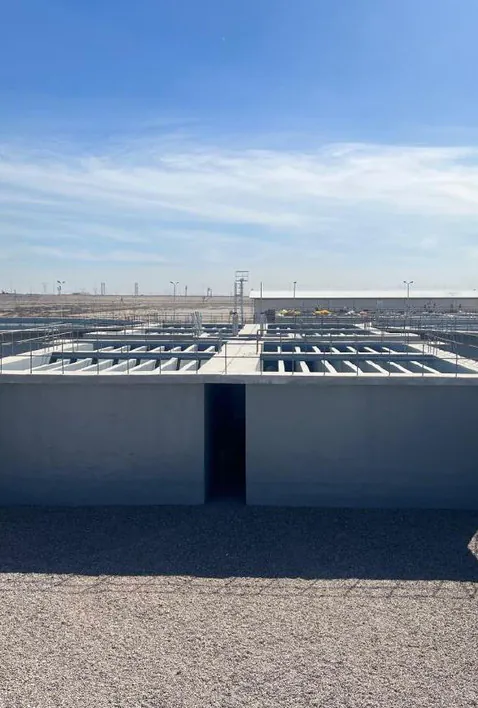
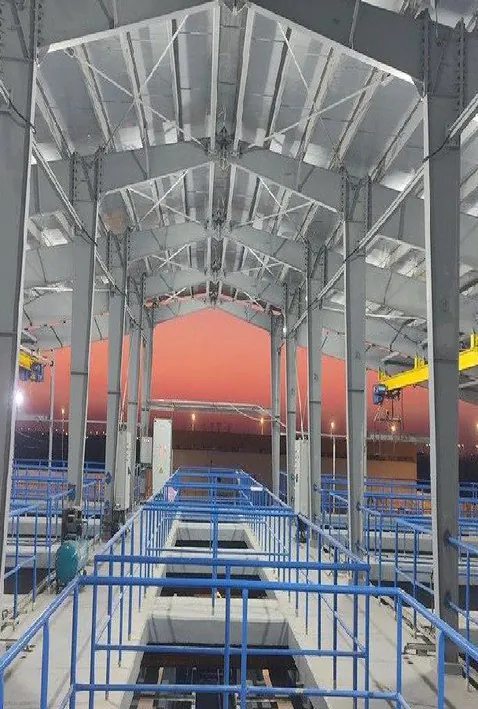
- 12 filtersGravity sand filtration
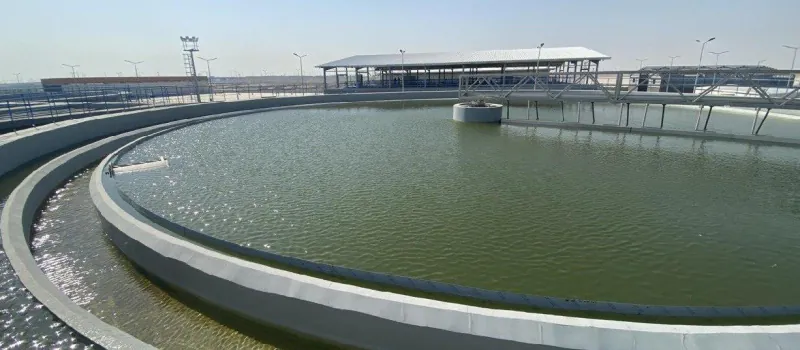
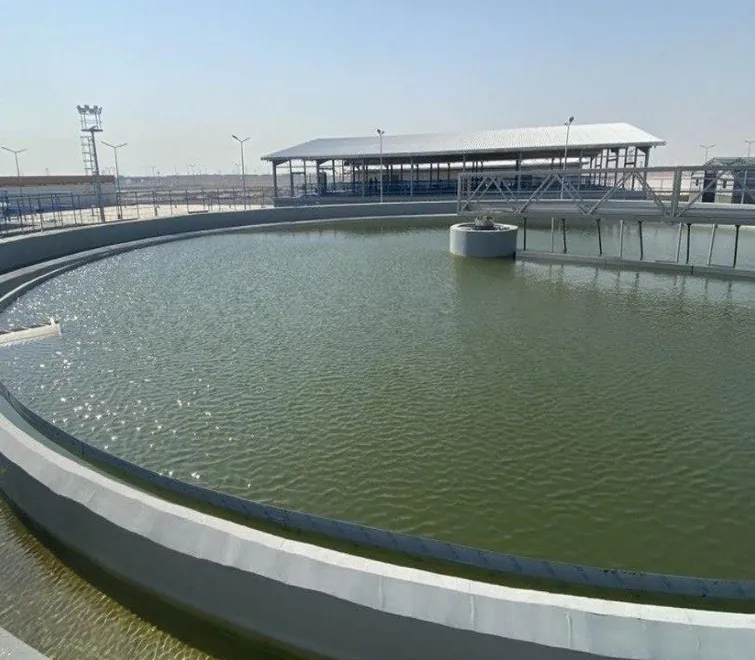
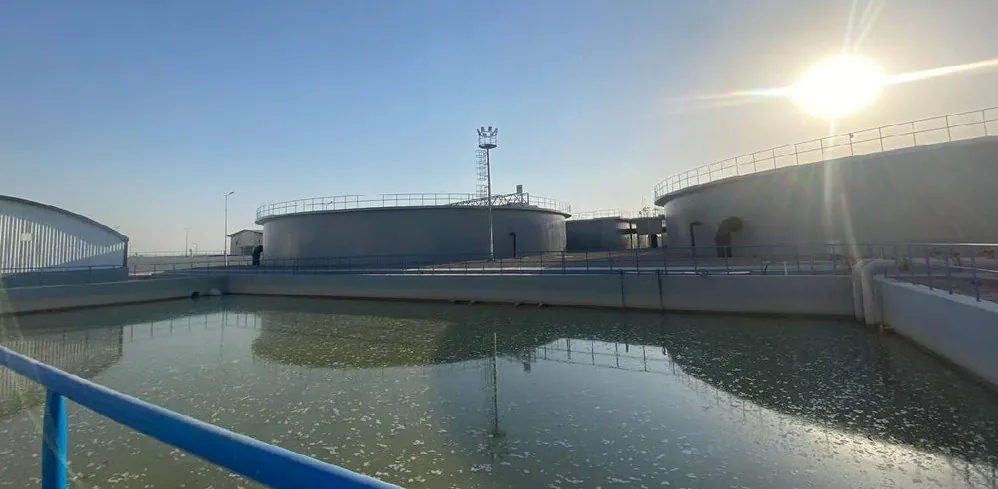
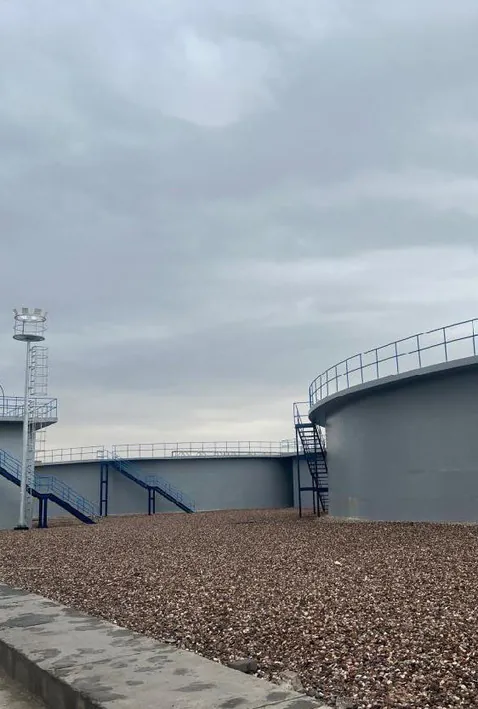
- 4 basinsSedimentation, 35 m diameter
Overview
- Location
- Basra Governorate, Iraq
- Beneficiary
- Basra Governorate
- Water type
- Raw surface water; inlet turbidity 25 typical and 137 maximum, outlet turbidity below 3
- Capacity
- 130,000 m³/day, i.e. about 5,400 m³/h
- Process
- Rapid mixing, hydraulic flocculation, sedimentation, gravity sand filtration, disinfection by electrochlorination
- Sludge
- Alum sludge tank of 1,575 m³ with 3 days of storage
What this reference shows
A complete conventional treatment chain for surface water of varying turbidity, with on-site generation of the disinfectant by electrochlorination and storage of alum sludge.
Treatment chain
From the raw-water pumps to the network
- Raw-water pumps
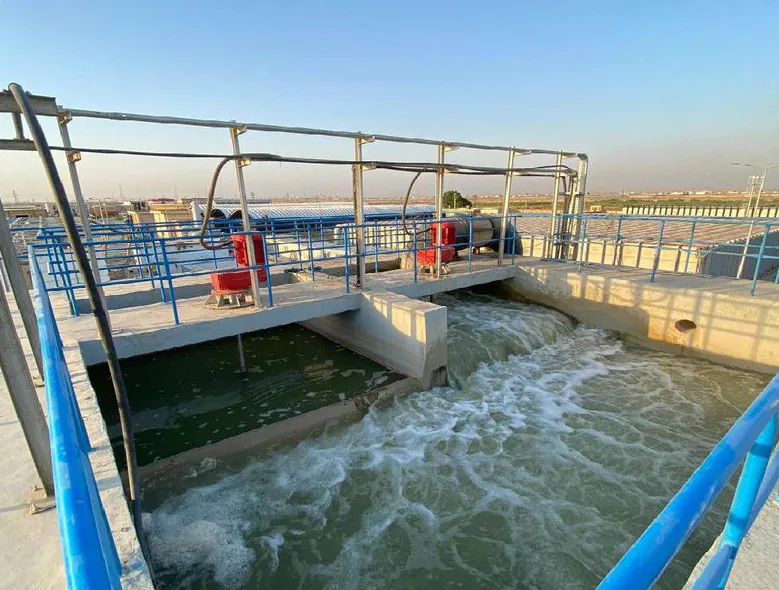
- Rapid mixingAlum and polyelectrolyte
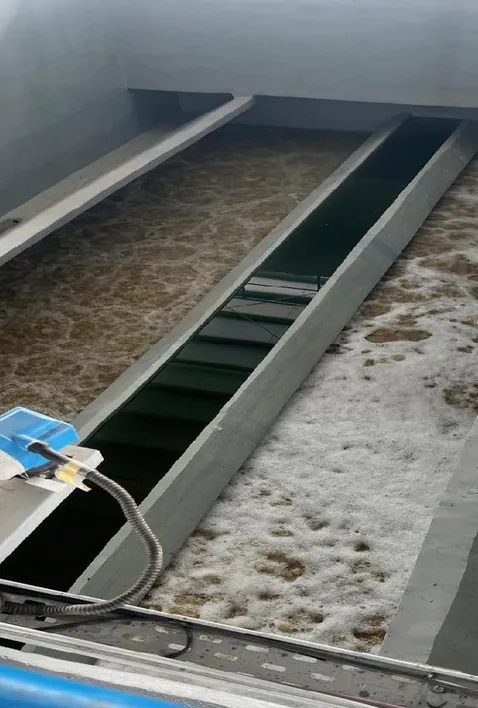
- Hydraulic flocculation
- Sedimentation
- Sand filtration
- Filtered-water tankHypochlorite injection
- Treated-water pumps
The hypochlorite is generated in the on-site electrochlorination unit.
Plant units
| Unit | No. | Main data |
|---|---|---|
| Rapid-mix basins | 2 (1+1) | 3.0 × 3.0 × 3.5 m; retention time 18 s; mixer power 18.5 kW |
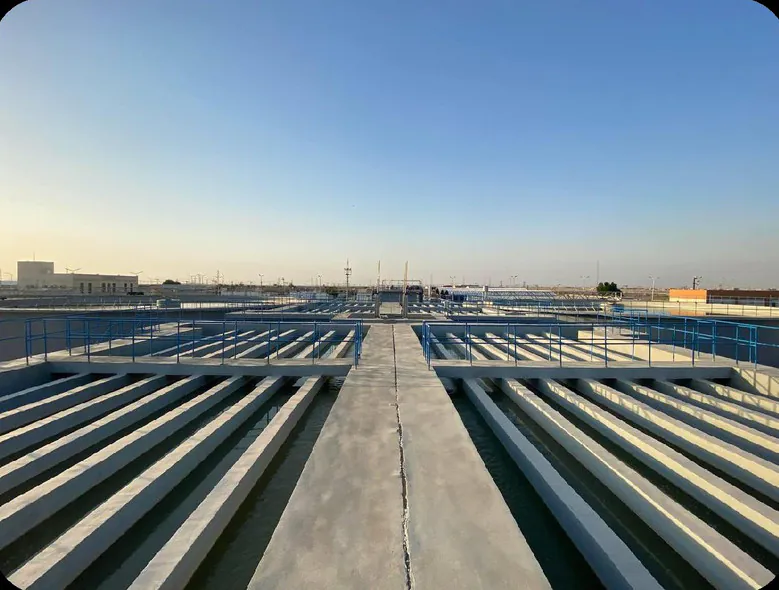
| Hydraulic flocculation basins | 4 | 17.4 × 7.9 × 4.11 m; 7 baffles; retention time 13 min |
| Sedimentation basins | 4 | Diameter 35 m; side water depth 3.5 m; surface loading 34 m/day; retention time 2 hours |
| Sand filters | 12 | Filter area 50 m²; design flow 450 m³/h per filter; sand depth 1,000 mm |
| Filtered-water tanks | 2 | 5,000 m³ per tank; retention time 2 hours |
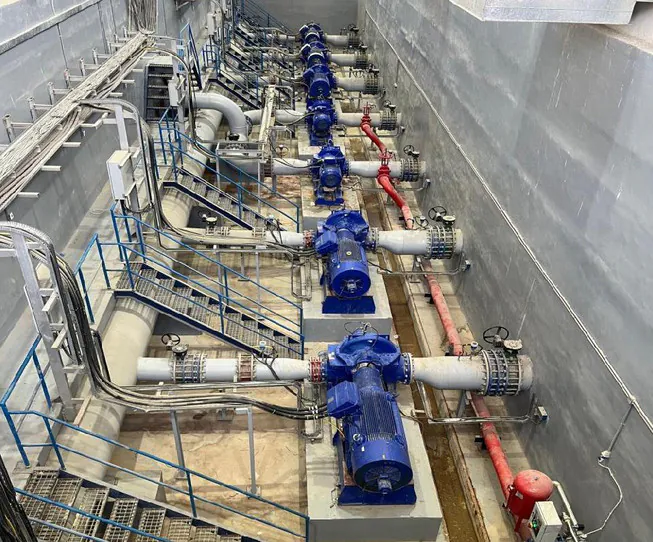
| Transfer pumps | 6 (4+2) | Discharge head 80 m; pump power 400 kW |
| Electrochlorination | 3 electrolyzers | 10 kg/h per electrolyzer; two hypochlorite tanks of 30 m³ each |
| Alum sludge tank | 1 | 35 × 15 × 3 m; volume 1,575 m³; storage time 3 days |
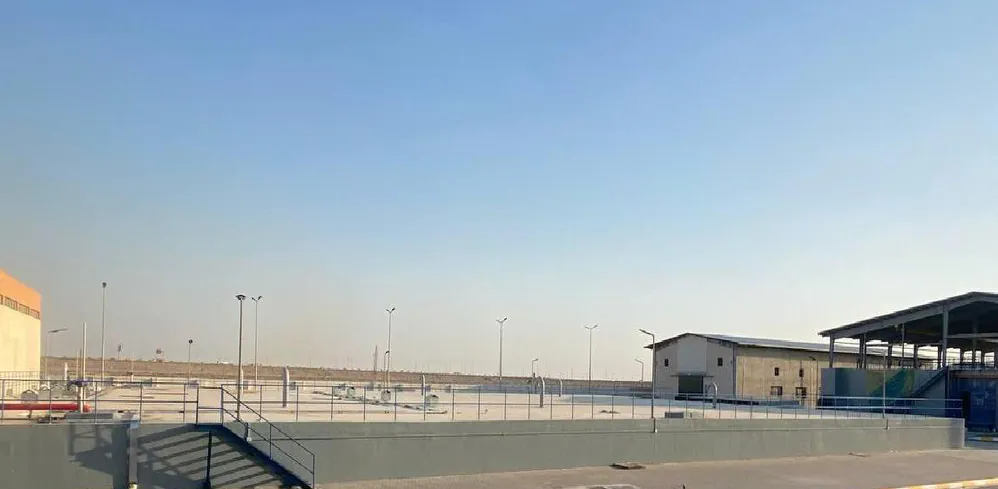
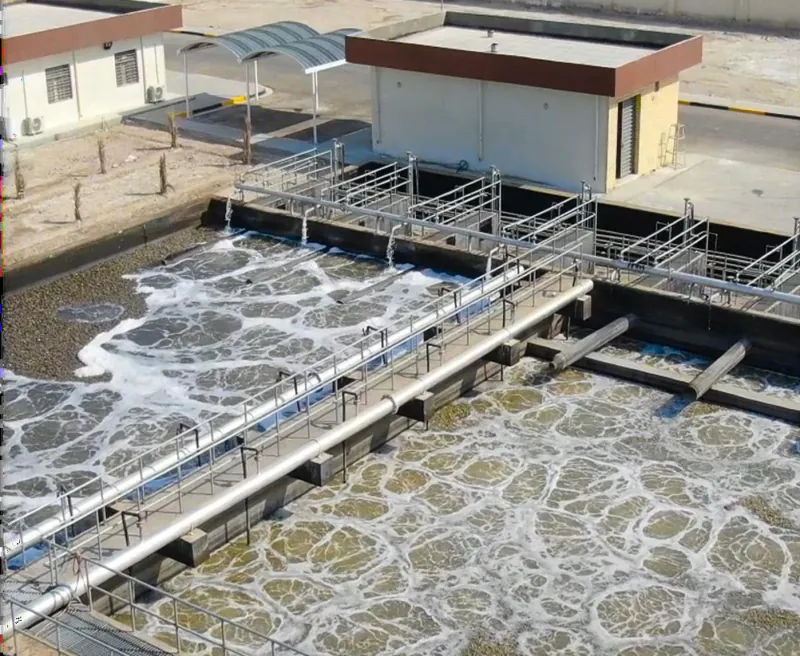
Plant photographs
Treatment units
Other projects and references
See other work
 Technical reference — Basra
Al-Midaina wastewater treatment plant
Biological treatment by MBBR with a polishing basin and UV disinfection. Nominal capacity 10,000 m³/day.
View project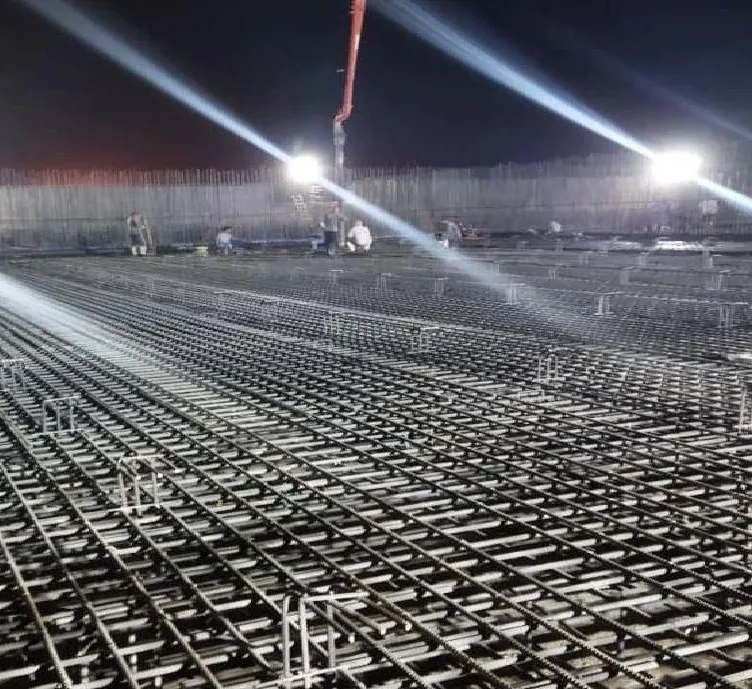 Technical reference — Basra
Al-Qurna wastewater treatment plant
Biological treatment plant for Al-Qurna district using MBBR and a bioreactor. Nominal capacity 35,000 m³/day.
View project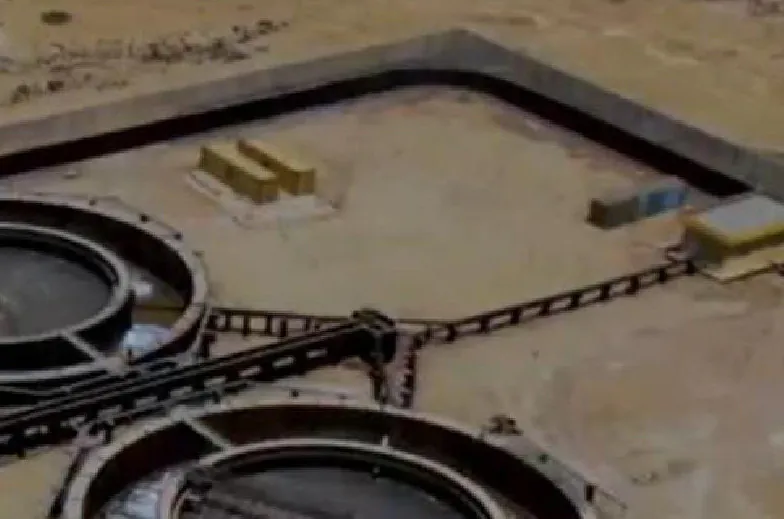 Technical reference — Basra
Al-Hartha wastewater treatment plant
A plant with two lift stages and treatment by sedimentation, aeration and disinfection, with odor removal. Capacity 16,000 m³/day.
View projectRequest a study or proposal
Start with your project data.
Send us your project data. Our technical team reviews it and comes back with the right next step: a preliminary study, or a technical and commercial proposal.
Data that helps us prepare the proposal
- The water source and a recent analysis of it.
- The required capacity and its unit: m³/day or m³/h.
- The required product-water or effluent quality.
- The project site, available area and power source.
- The scope required: study, supply, or full execution.
- The expected project schedule.