
Desalination reference — with WMV
100,000 m³/day desalination line reference
A two-pass reverse osmosis desalination line for petrochemical utilities, with energy recovery by Pelton turbines. A reference in cooperation between WMV and Handasat Al-Mualaja.
- 100,000 m³/dayCapacity of the first line
- 400,000 m³/dayTotal plant capacity: 4 lines
- 3.8 haPre-treatment and RO unit
- 11 unitsFirst-pass reverse osmosis
Overview
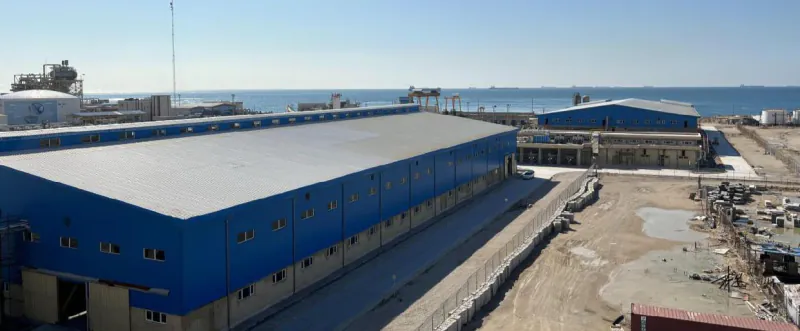
- Reference by
- WMV and Handasat Al-Mualaja
- Scope of the reference
- The first 100,000 m³/day line of a plant with a total capacity of 400,000 m³/day on 4 parallel lines
- Application
- Desalination plant for petrochemical utilities
- Water source
- Seawater; total dissolved solids 41,800 ppm in the water analysis
- Product water
- 11 × 10,152 m³/day from the first pass; used for cooling, services, drinking and fire-fighting
- Energy recovery
- Pelton turbines on the first-pass high-pressure pumps
What this reference shows
A complete desalination chain for industrial utilities: pre-treatment by gravity filtration, two-pass reverse osmosis and a demineralization unit, with detailed design data that is useful when studying similar projects.
The capacities quoted for the desalination references are line capacities, not the total capacity of the plants they belong to.
Treatment chain
Treatment chain and equipment
- Intake lineSulfuric acid injection
- Rapid mixingFerric chloride
- FlocculationPolyelectrolyte
- Dual-media filtration
- Cartridge filters
- Reverse osmosis — first pass
- Reverse osmosis — second pass
- Demineralization
Main equipment
| Unit | No. | Main data |
|---|---|---|
| Rapid-mix basins | 2 | 6,660 m³/h per basin; reaction time 61 s |
| Flocculation basins | 2 | Two stages; reaction time 15.6 min |
| Gravity dual-media filters | 20 | 666 m³/h per filter; area 112 m²; filtration rate 5.95 m/h |
| Filtered-water tank | 1 | Net volume 5,250 m³ |
| RO feed pumps | 6 (5+1) | Normal capacity 2,515 m³/h; differential pressure 4.5 bar |
| Cartridge filters | 22 (20+2) | 630 m³/h per filter; design pressure 6 bar |
| High-pressure pumps — first pass | 11 | 1,254 m³/h; 69 bar; 2,745 kW; Pelton turbine of 1,006–1,262 kW |
| First-pass units | 11 | 124 pressure vessels and 868 SWC5-LD membranes per unit; permeate 423 m³/h; recovery 37% |
| High-pressure pumps — second pass | 6 | 815 m³/h; 18.5 bar; 740 kW |
| Second-pass units | 6 | CPA3 membranes; recovery 86% |
| Demineralization unit | 5 (4+1) | 195 m³/h per unit; outlet dissolved solids below 0.05 ppm |
The desalination references used equipment from manufacturers such as Hydranautics (reverse osmosis membranes) and Energy Recovery (PX pressure exchangers). They are named here as technical documentation, not as a statement of agency or commercial representation.
Technical photographs
From pre-treatment to demineralization
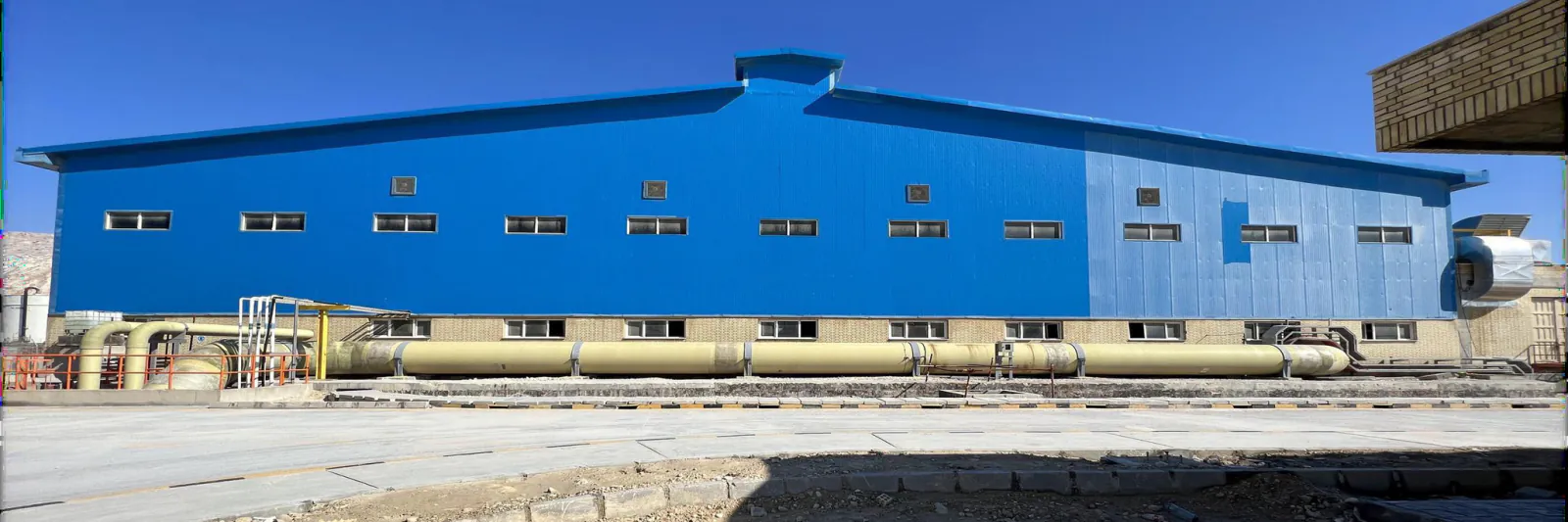
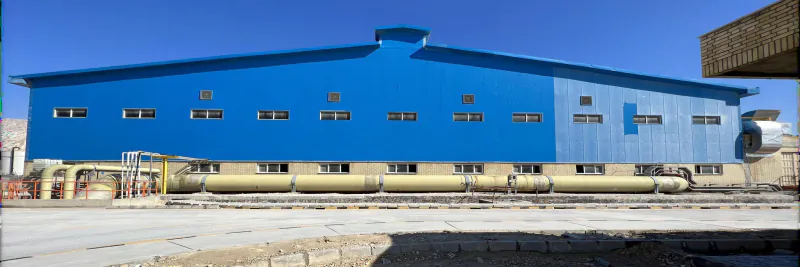 Building housing the first- and second-pass reverse osmosis units.
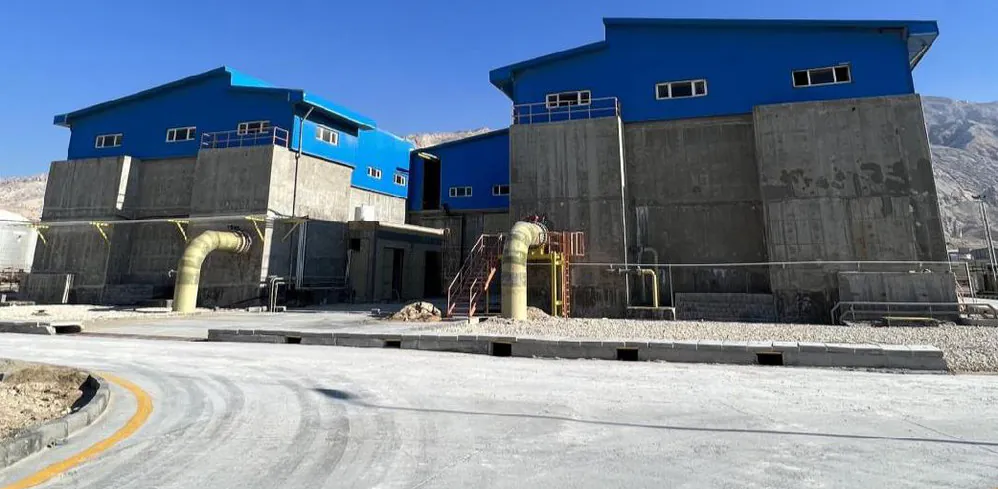
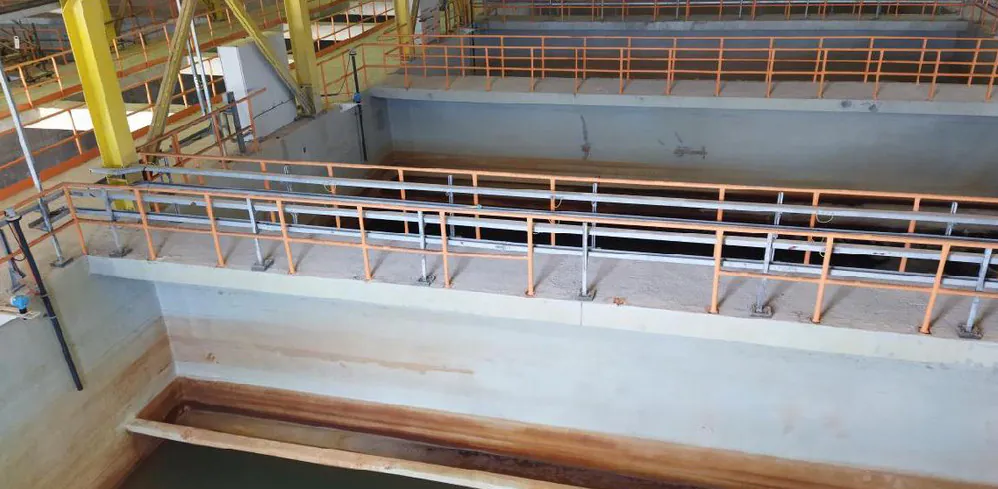
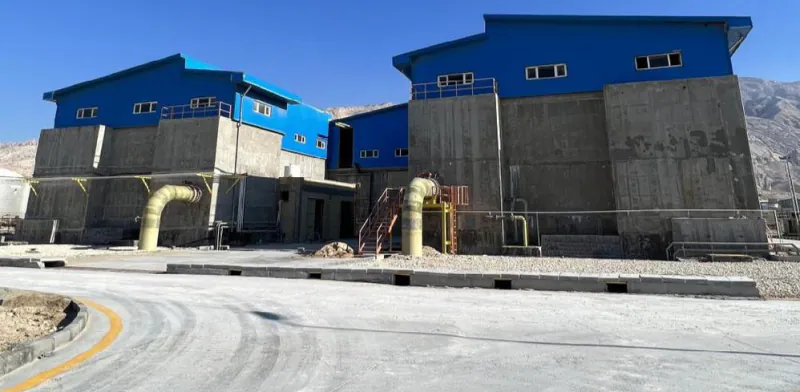 Rapid-mix basin building.
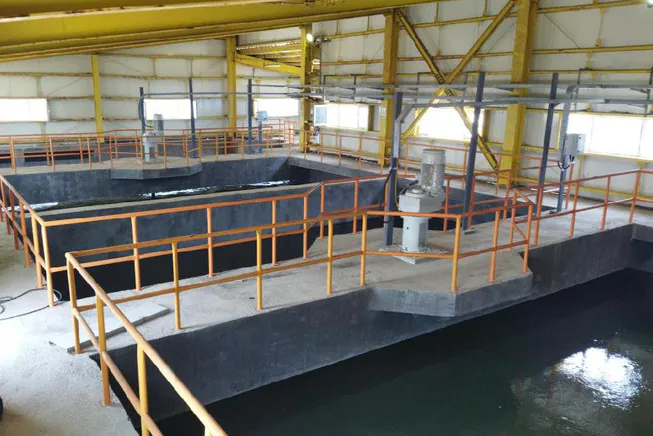 Flocculation basin.
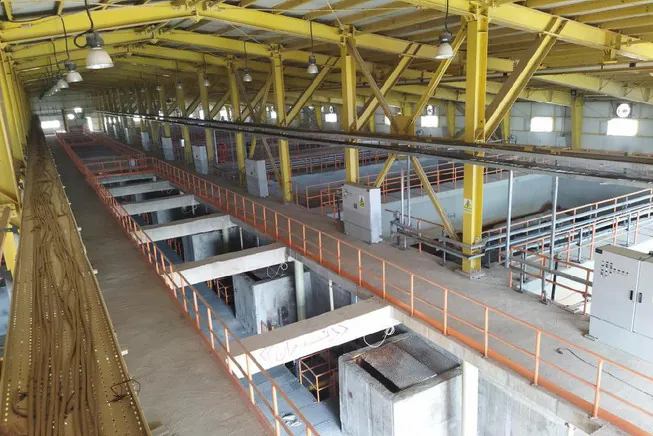 Dual-media filter hall.
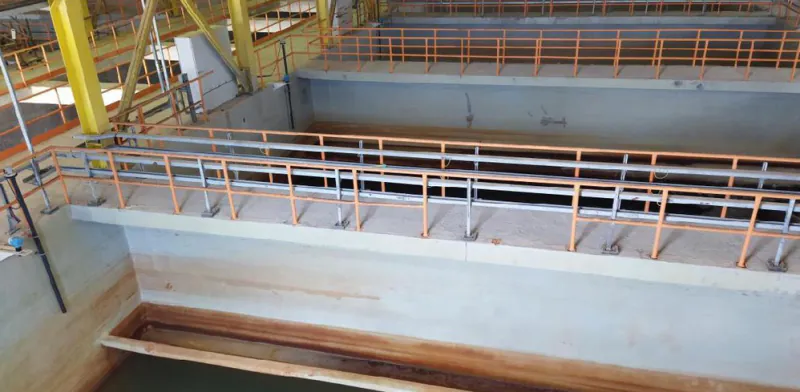 Gravity dual-media filter.
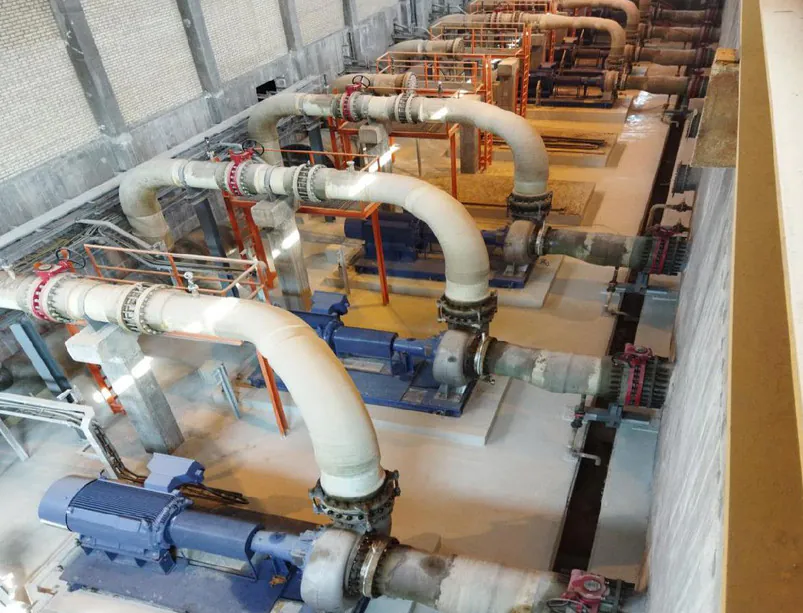 Filter backwash pumps.
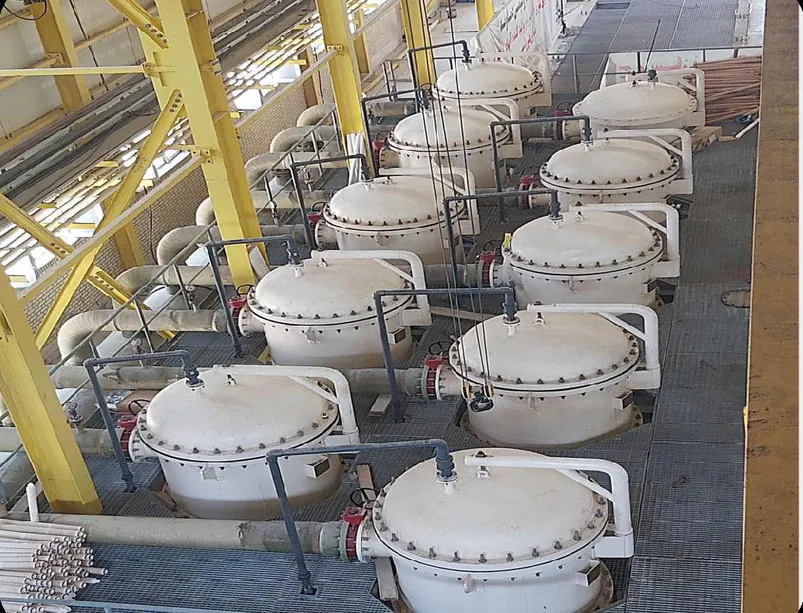 Cartridge filters ahead of the first reverse osmosis pass.
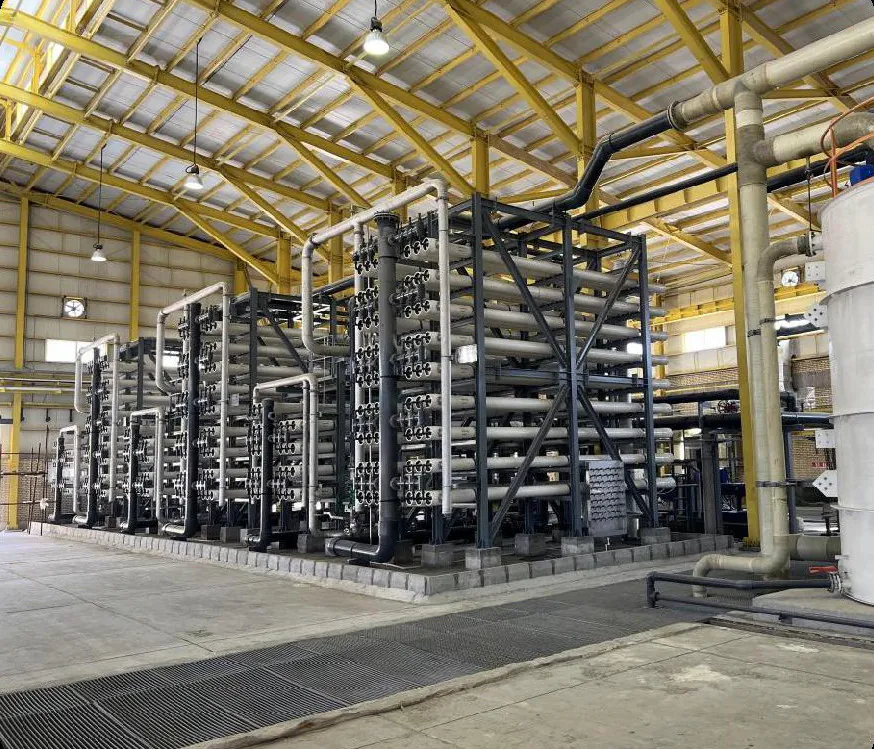
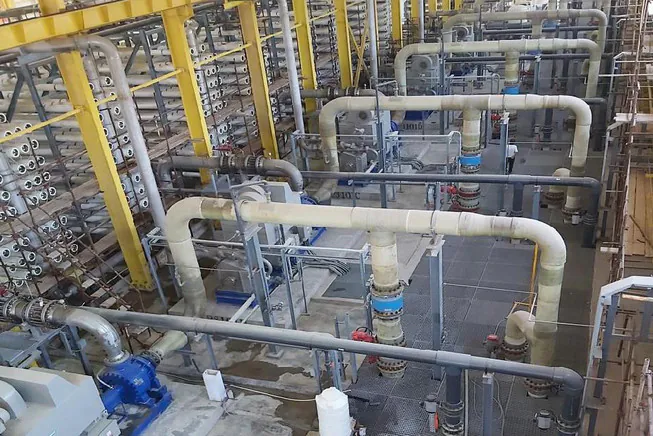 First-pass pressure vessels.
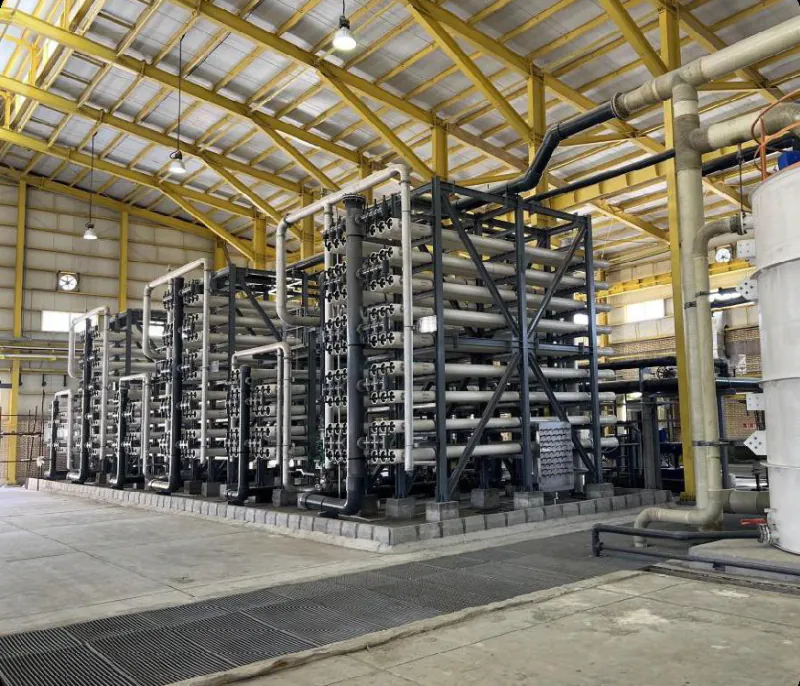 Second-pass reverse osmosis units.
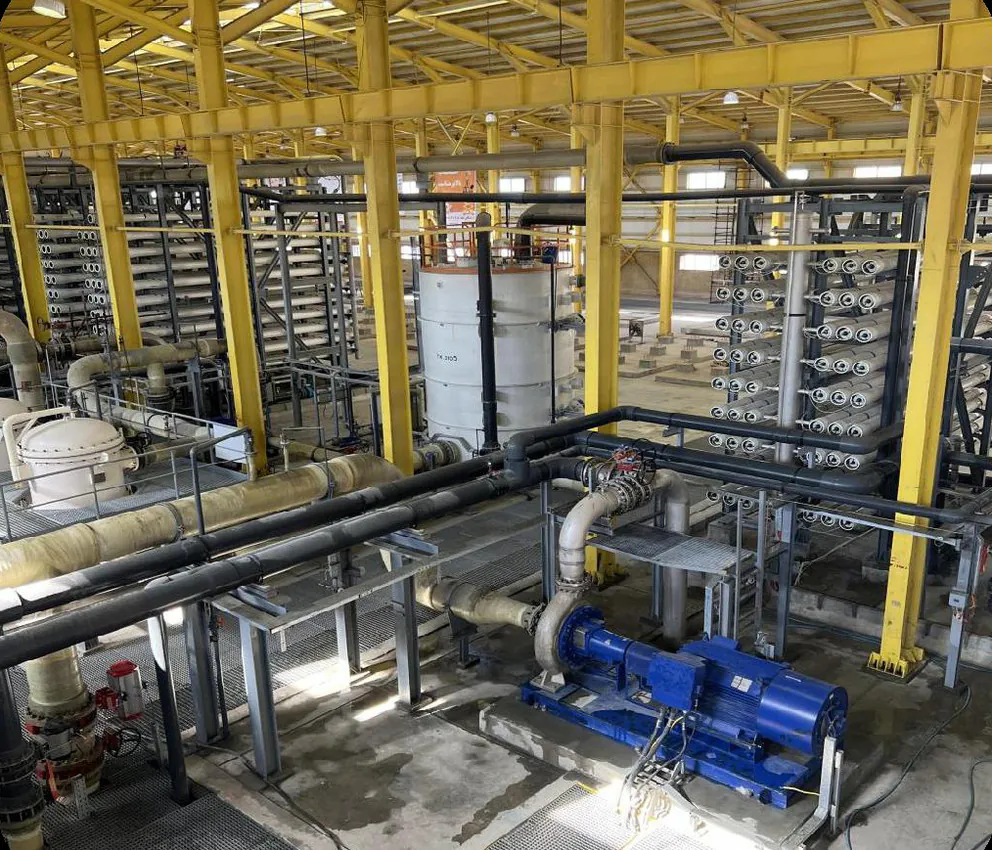
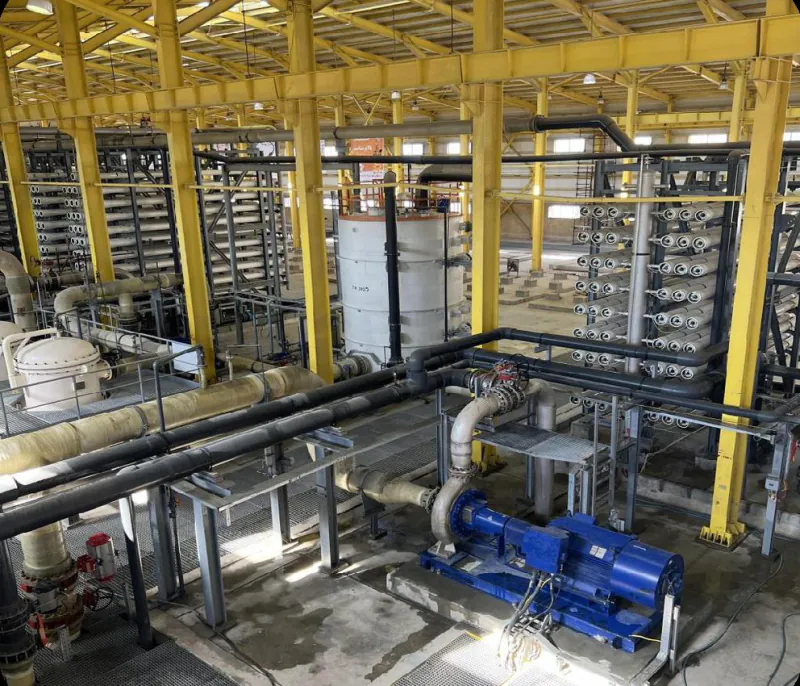 Second-pass high-pressure pump.
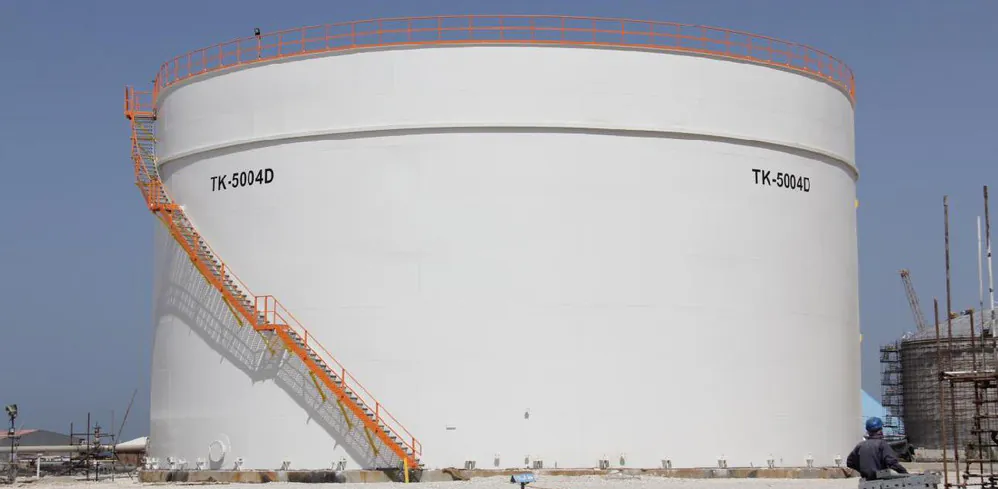
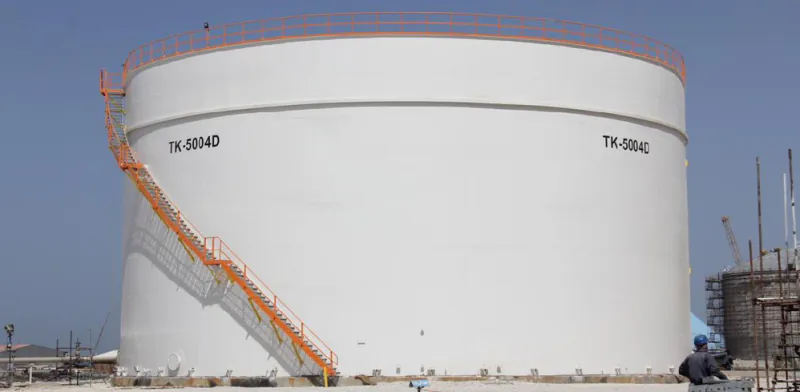 First-pass permeate tank.
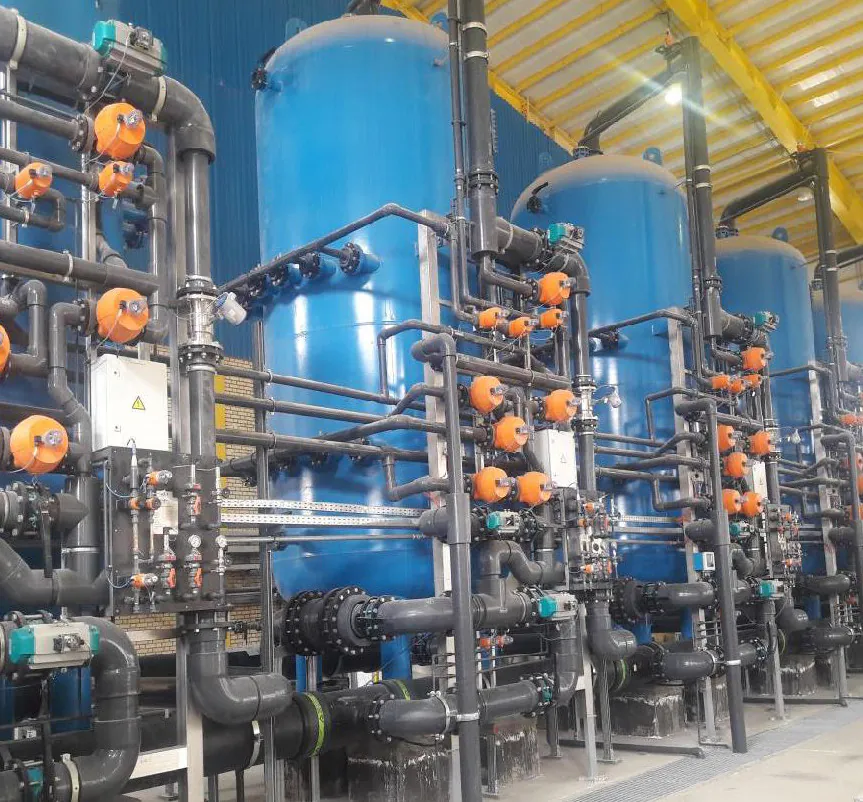 Demineralization unit.
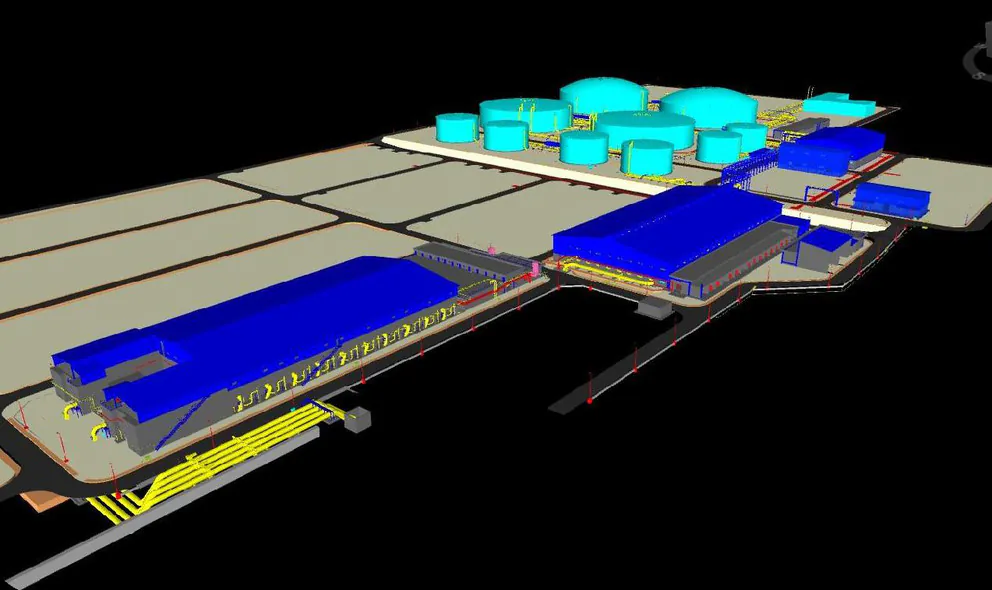
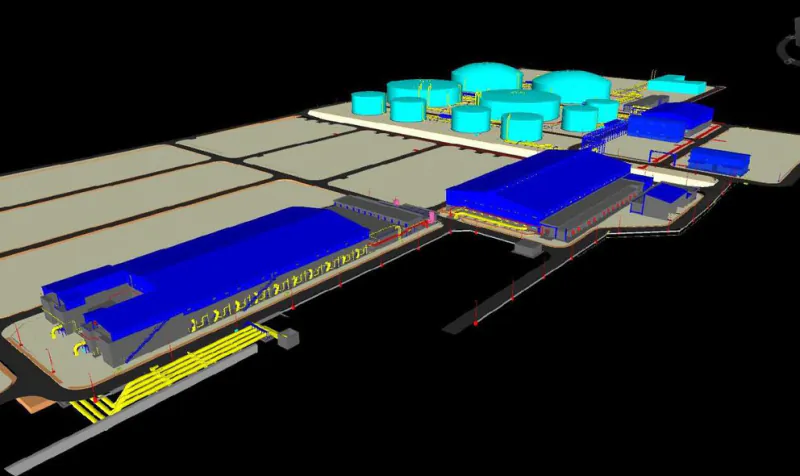 Three-dimensional model of the desalination plant.
Other projects and references
See other work
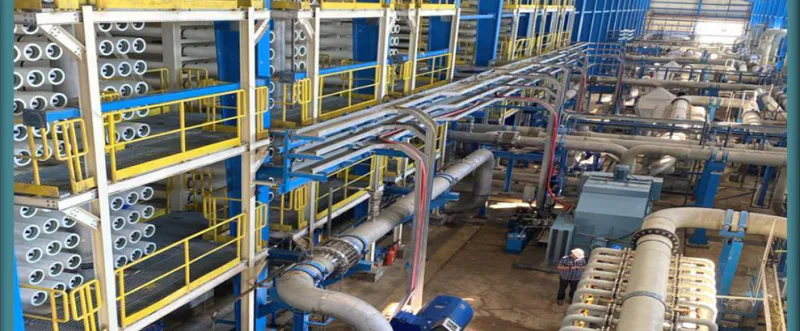 Desalination reference — with WMV
200,000 m³/day desalination line reference
Reverse osmosis line producing drinking water, with dissolved air flotation and pressure exchangers.
View project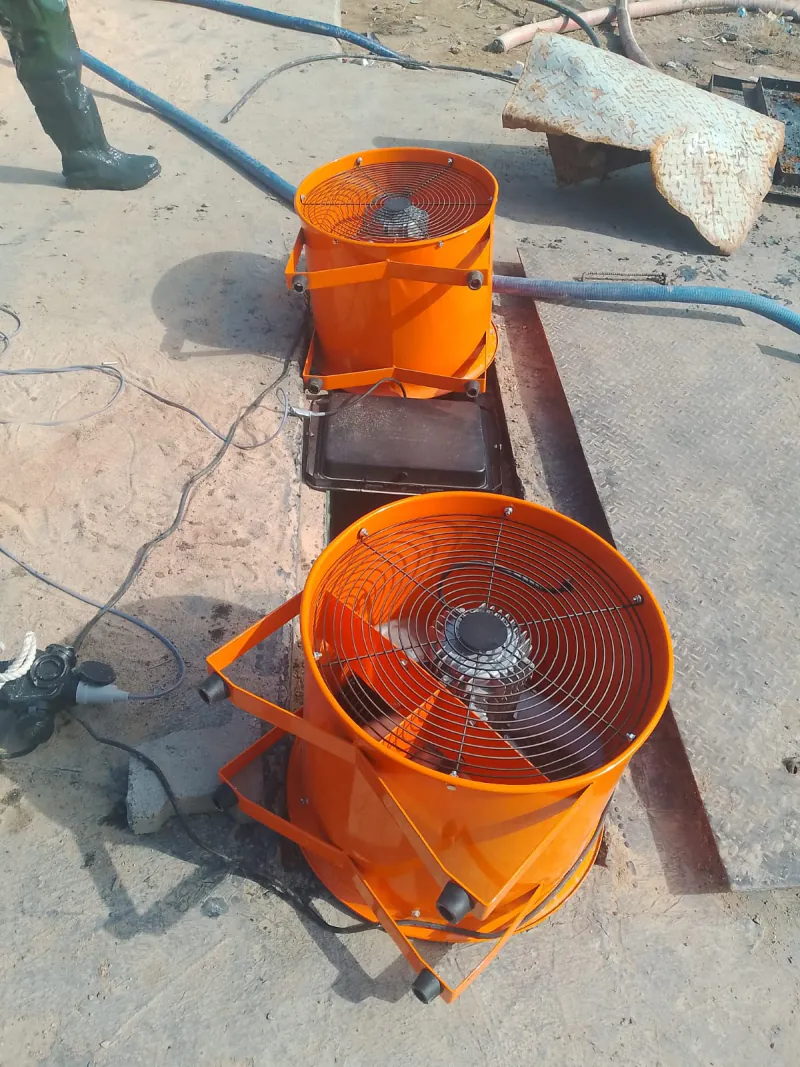 Execution contract
Wastewater and stormwater stations — Izz al-Din Salim
Mechanical and electrical works for the wastewater and stormwater stations; 75-day duration.
View project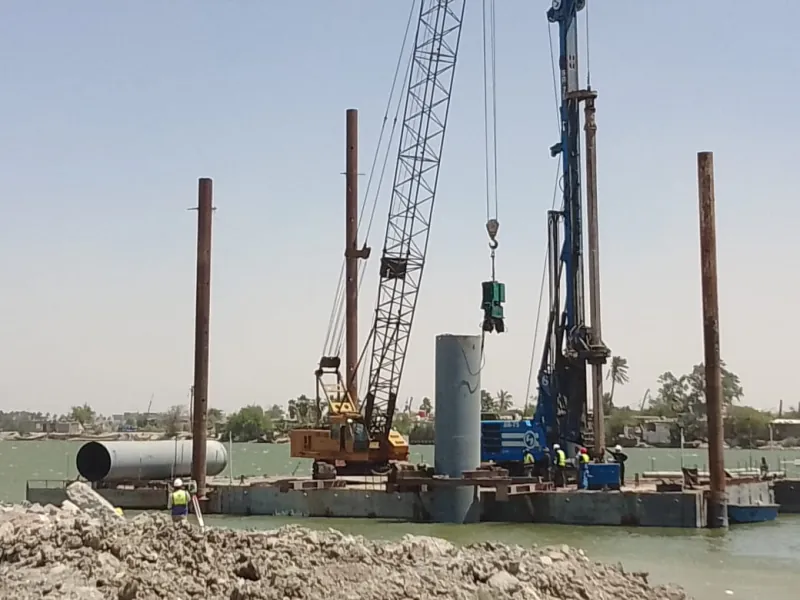 Subcontractor
Shalamcheh–Basra railway bridge over the Shatt al-Arab
Subcontractor on the railway bridge over the Shatt al-Arab, part of the Iraq–Iran rail link.
View projectRequest a study or proposal
Start with your project data.
Send us your project data. Our technical team reviews it and comes back with the right next step: a preliminary study, or a technical and commercial proposal.
Data that helps us prepare the proposal
- The water source and a recent analysis of it.
- The required capacity and its unit: m³/day or m³/h.
- The required product-water or effluent quality.
- The project site, available area and power source.
- The scope required: study, supply, or full execution.
- The expected project schedule.